Private Label Skincare Thailand: A Practical Guide for Philippine Brand Owners
If you are building a skincare line in the Philippines, sooner or later the question becomes practical: who actually makes the product? For many Filipino brand owners, KOLs launchi
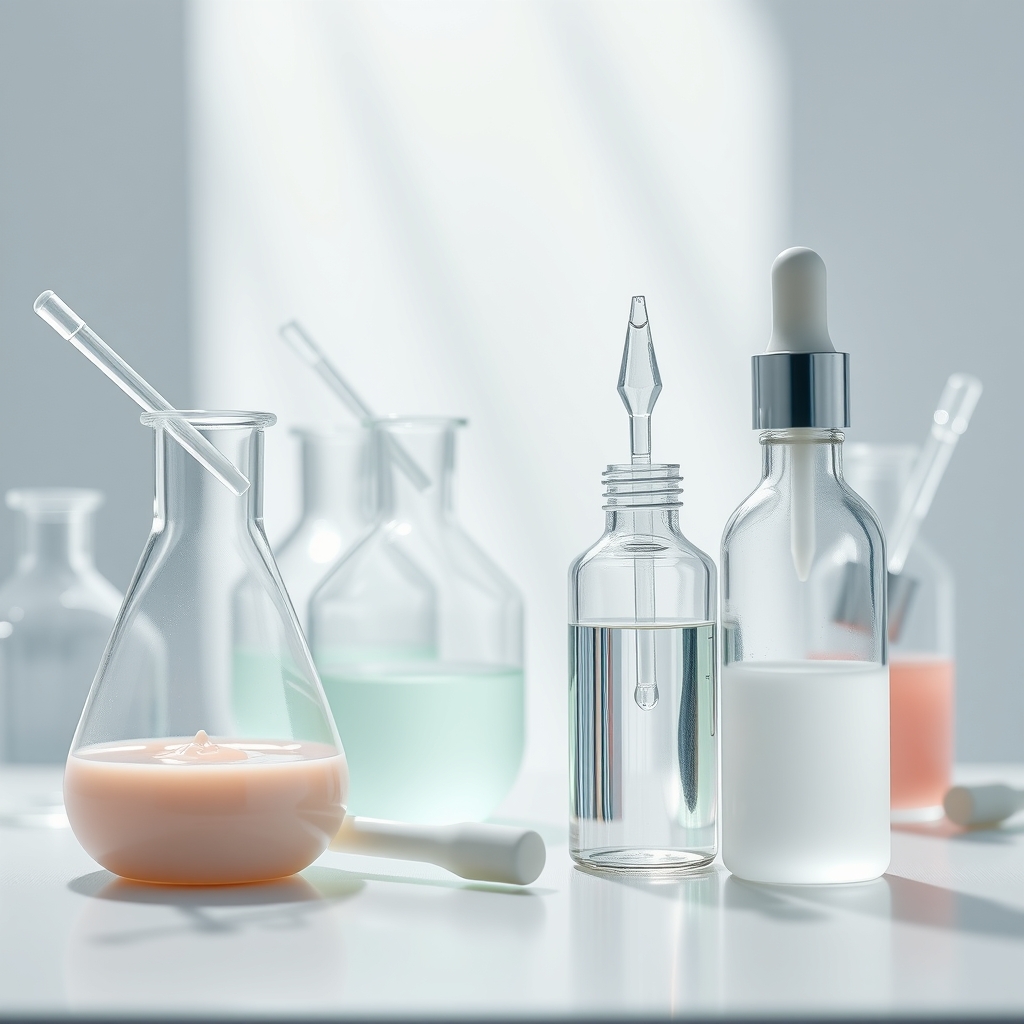
If you are building a skincare line in the Philippines, sooner or later the question becomes practical: who actually makes the product? For many Filipino brand owners, KOLs launching their own label, distributors adding a private label range, and clinics or spas productising their treatments, private label skincare Thailand has become a serious option — close to home, strong in herbal and wellness formulation, and well set up for export documentation. This guide walks through how private label manufacturing in Thailand works, what you should prepare before your first conversation with a manufacturing partner, and how 5FINE manages the process end to end as a single point of contact. The tone here is advisory, not promotional: the aim is to help you make a better decision, whether or not you work with us.
What "private label skincare Thailand" actually means for your brand
Private label (often used interchangeably with OEM/ODM in this industry) means the product is manufactured by a partner factory and sold under your brand name. In practice there are three routes, and choosing the right one early saves a great deal of time:
- ODM — you select an existing, proven formula from a catalogue and brand it as your own. This is usually the fastest path to a launch-ready SKU, and the most predictable in terms of cost and performance.
- OEM — you bring your own formula or specification, and the manufacturer produces to it. Suitable if you already have a formulation, an inherited house recipe, or a clinic protocol you want scaled.
- Full custom — you co-develop a new formula from scratch with the development team: active system, texture, scent, claims direction.
Thailand is a natural hub for this because the ecosystem around skincare manufacturing — raw materials, herbal extracts, packaging suppliers, testing labs, export logistics — sits closely together. For a Philippine brand owner, that means fewer moving parts to coordinate across borders.
5FINE operates as an OEM/ODM partner that manages production through a network of GMP-certified partner factories in Thailand, Korea, Japan and Dubai. We are not a broker passing your enquiry along, and we do not claim to own the factories — our role is to take responsibility for the whole chain, from concept to the shelf, through one point of contact.
Why Thailand suits Philippine skincare brands
Thailand's strength in skincare manufacturing is not generic — it is specific, and it matters when you are choosing where to produce.
Herbal and botanical depth. Thailand has a long tradition in herbal and traditional formulation, which flows directly into skincare: balms, oils, botanical actives, and wellness-adjacent topicals. If your brand story leans natural, spa-inspired or tropical-botanical, this is fertile ground.
Halal-ready capability. For brands planning to sell beyond the Philippines — into Malaysia, Indonesia or the UAE — Thai manufacturing is well oriented toward halal-ready development. Documentation such as FDA, KFDA or HALAL files is prepared according to the destination market and the specific product, on request, rather than assumed to exist for every item.
Regional proximity. Shipping lanes between Thailand and the Philippines are well travelled, and time zones align, which makes sampling rounds and approvals less painful than working across continents.
Access to a wider network. A Thailand-anchored partner does not have to mean Thailand-only production. Within 5FINE's network, K-beauty R&D strengths sit in Korea, precision quality in Japan, fragrance and luxury finishing in Dubai, and herbal and halal-ready work in Thailand. The right country is chosen for the product, not the other way around.
What you can produce: skincare and the categories around it
Most Philippine brands start with skincare, then expand. It helps to know the adjacent categories early, because packaging decisions and brand architecture are easier when you can see the second and third SKU coming.
Core skincare: serums, creams, toners, masks, sunscreen, and sun and special care. These form the backbone of most private label launches.
Adjacent beauty: body care, hair care (shampoo, treatment), makeup such as cushion and lipstick, and professional or spa lines — the last being especially relevant for clinics and spa chains turning in-house treatments into retail products.
Men's care: skincare, hair and beard, body care — an underserved segment in many Southeast Asian markets.
Supplements and ingestible beauty: collagen, vitamins, omega-3, weight management, herbal supplements, functional drinks and functional coffee or tea. Many beauty brands find their second revenue stream here.
Fragrance and scent: EDP, body mist, essential oils, candles, diffusers and home fragrance, including signature scent development.
Herbal and traditional, baby and mom care, and home care and lifestyle round out the catalogue, which spans roughly 690 reference items across eight groups. You can request the catalogue to see what is already available as a proven formula before deciding whether you need custom development.
Packaging: where a private label brand is won or lost
Formula quality is the foundation, but on a Philippine shelf — or on a Shopee or TikTok Shop listing — packaging is what converts. This is also where first-time brand owners most often get stuck, because packaging involves tooling, lead times, decoration methods and compatibility testing that are easy to underestimate.
Available options include droppers, airless pumps, jars, glass bottles, tubes, custom shapes, and luxury finishing such as hot stamping. Three principles are worth keeping in mind:
1. Match the pack to the formula. Actives sensitive to air and light behave differently in an airless pump than in an open jar. The packaging decision is a formulation decision. 2. Decide where premium is visible. Not every element needs upgrading. Often a single considered detail — a weighted cap, a foil accent, a well-chosen finish — carries the perceived value of the whole line. 3. Plan the family, not the item. If three more SKUs are coming, design a system that lets them share components.
Within 5FINE, brand identity, naming, design and packaging sit inside the same process as formulation, so artwork, regulatory text and pack specification are reconciled before production rather than after.
Documentation and bringing product into the Philippines
This is the area Philippine brand owners ask about most, and it deserves a careful answer rather than a reassuring one.
Products are manufactured in GMP-certified partner facilities, and testing and documentation files are prepared for the destination market according to the product and the requirements involved. Where a product already has existing certification, the relevant documents are supplied per item at the point of ordering.
What we would always recommend: confirm the current cosmetic notification, labelling and import requirements for your product category directly with the relevant authority or your customs broker in the Philippines. Rules differ by category — a sunscreen, a supplement and a basic moisturiser are not treated the same way — and they change. A good manufacturing partner prepares the technical file and supporting documents; the importer of record still needs to understand their own obligations locally.
What we will not do is promise outcomes we do not control. Timelines, documentation scope and cost are confirmed at the quotation stage, once the product, specification, packaging and quantity are defined.
How the process runs, step by step
5FINE follows an eight-step process, and it is worth seeing it laid out because it tells you what will be asked of you and when.
1. Discovery and consultation — your market, positioning, budget frame, target customer and timeline. 2. Concept and positioning — what the brand stands for and which SKUs lead. 3. Formula development and sampling — selecting from existing formulas, matching to your spec, or co-developing something new. 4. Design and packaging — identity, artwork, component selection, finishing. 5. Documentation and certification — testing and files prepared for the destination market, as required. 6. Production — at the partner facility best matched to the product category. 7. Quality control — checks before release. 8. Logistics and export — shipment and distribution support.
To make the first conversation productive, come prepared with: the product type you have in mind, your target retail price point, your sales channel (retail, clinic, e-commerce, distribution), the markets you intend to sell into, and your indicative quantity. Minimum quantities, pricing and production timing depend on the product and volume, and the team will advise on these when preparing your quotation.
That preparation is what separates a six-week clarification loop from a focused development cycle.
Cần hỗ trợ từ chuyên gia?
Để lại thông tin, đội ngũ sẽ liên hệ trong 24 giờ.
Câu hỏi thường gặp
Is private label skincare from Thailand suitable for a first-time brand owner in the Philippines?
Yes — it is one of the more common starting points, particularly via the ODM route, where you brand an existing proven formula rather than developing one from scratch. That reduces the number of unknowns in your first production run. If you have no formulation background, starting here and reserving custom development for a later signature product is usually the more sensible sequence.
What is the minimum order quantity and how much does it cost?
There is no single answer, because it depends on the product type, the packaging components, the formula and the quantity involved. Rather than quoting a figure that may not apply to your case, the team reviews your brief and advises on quantities, pricing and timing when preparing your quotation.
Can 5FINE handle the regulatory documents for selling in the Philippines?
Products are made in GMP-certified partner factories, and testing and documentation files are prepared for the destination market according to the product and requirements, on request. Where certification already exists for an item, the documents are supplied at the point of ordering. We would still advise confirming current notification, labelling and import requirements for your specific category with the relevant authority or your customs broker in the Philippines.
Does 5FINE only manufacture in Thailand?
No. Thailand is a strong base — particularly for herbal, botanical and halal-ready formulations — but production is managed across a network of GMP-certified partner factories in Thailand, Korea, Japan and Dubai. Korea brings K-beauty R&D depth, Japan precision quality, and Dubai fragrance and luxury finishing. The production location is chosen to suit the product.
Can I start with skincare and add other categories later?
That is a common path. The catalogue spans eight groups — beauty and cosmetics, supplements, fragrance, packaging, men's care, home care, herbal and traditional, and baby and mom care — so a skincare line can be extended into ingestible beauty, body care or fragrance under the same brand and through the same point of contact.
Nội dung do đội ngũ 5Fine biên soạn nhằm mục đích cung cấp thông tin. Một số liên kết có thể dẫn tới đối tác được giới thiệu.