
Bài viết
Private Label Skincare in Saudi Arabia: A Buyer's Guide for Brand Owners
Saudi Arabia has become one of the most watched beauty markets in the Gulf. Local brand owners, clinic groups, retail chains and content creators are no longer content to resell im
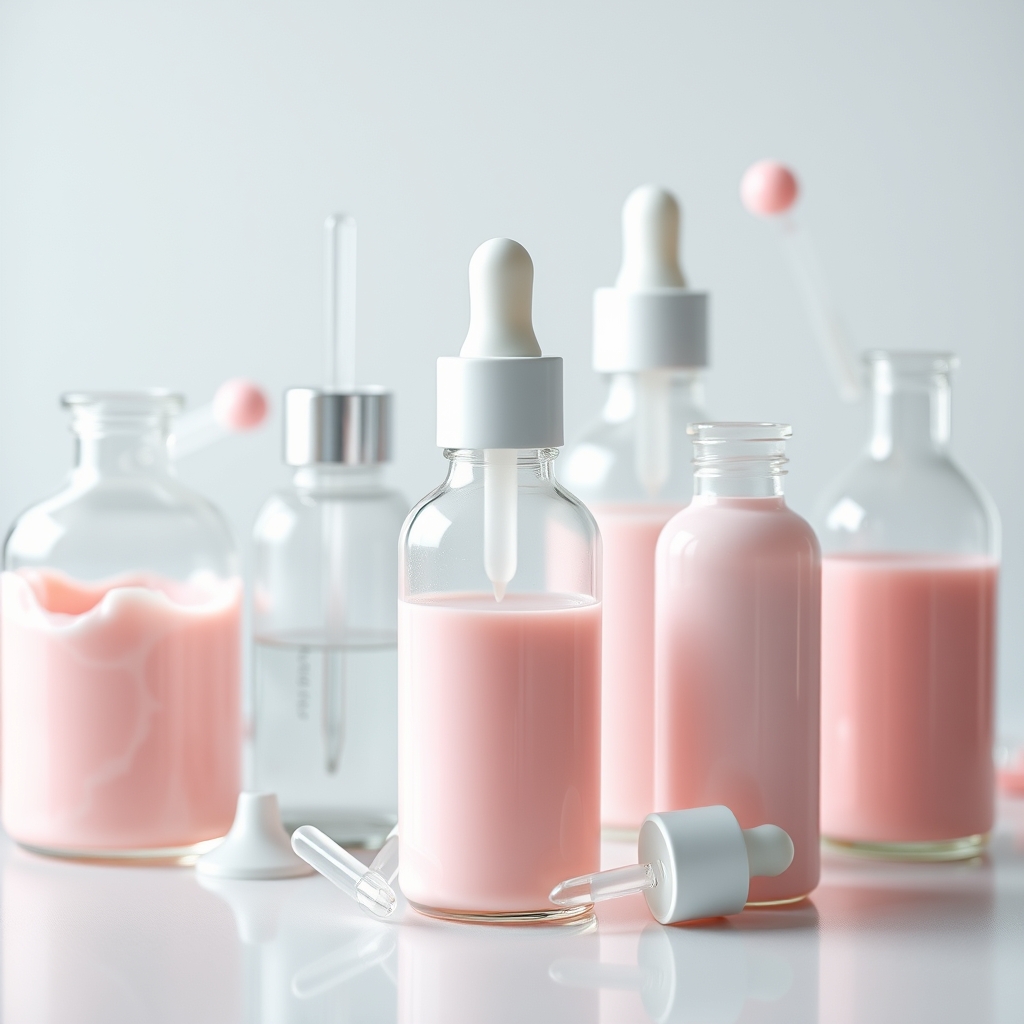
Saudi Arabia has become one of the most watched beauty markets in the Gulf. Local brand owners, clinic groups, retail chains and content creators are no longer content to resell imported lines — they want their own label, their own formula story, and margins that stay in-house. That ambition is exactly where private label skincare saudi arabia sourcing gets complicated: you need a formula, packaging that looks right on a Riyadh shelf, documentation for your market, and a production partner who can actually carry all of it. This guide is written for decision-makers, not end consumers. It walks through how private label skincare projects are structured, what to ask a potential partner, how halal-ready and GCC-facing considerations shape your choices, and how to move from an idea to a sellable SKU without assembling five separate vendors yourself.
Why Saudi brand owners are moving to private label
The economics are straightforward. When you resell someone else's brand, you compete on price and you never own the customer relationship. When you own the label, you control positioning, pricing architecture and the long-term asset. In Saudi Arabia this shift is reinforced by a few local realities: a young, highly digital consumer base; strong demand for skincare tailored to hot, dry, high-UV conditions; and a retail landscape — pharmacy chains, beauty specialty stores, clinic retail counters and marketplace sellers — where a well-packaged niche line can find distribution quickly.
Private label also lowers the barrier to entry compared with building a factory or an in-house lab. You are buying access to existing R&D, existing production capability and existing compliance know-how. What you invest in instead is brand strategy, distribution and customer acquisition — the parts that actually differentiate you.
The practical question is not whether to private label, but which route fits your stage. A clinic launching a post-treatment line, a KOL launching a hero serum, and a distributor filling a price gap in their portfolio all need different depth of customisation, and therefore different timelines and budgets.
ODM, OEM and full custom: choosing your route
Most skincare manufacturer relationships fall into three models, and knowing which one you are asking for makes every conversation faster.
**ODM (existing formula, your brand).** You select from a catalogue of proven, production-ready formulas and apply your own packaging and identity. This is the fastest and most accessible route, and it is how most first-time brands launch. You are not inventing chemistry; you are inventing a brand around chemistry that already works.
**OEM (your formula or specification).** You arrive with a formula, a benchmark product, or a defined spec sheet, and production is executed to match. This suits brands that already have a technical reference, a dermatologist partner, or a product they want reproduced to a given standard. OEM skincare in this sense is a manufacturing service wrapped around your intellectual starting point.
**Full custom.** You co-develop something genuinely new — a texture, an actives system, a sensorial profile that does not exist in the catalogue. This is the deepest form of formula development, requires more sampling rounds, and is usually chosen by brands with a strong technical claim at the centre of their positioning.
There is no hierarchy here. Many successful Saudi brands launch on ODM to validate demand, then move hero SKUs into custom development once volumes justify it. A good partner will tell you honestly which route your concept actually needs rather than upselling the longest one.
What to evaluate in a skincare manufacturer
Sourcing for the Saudi market rewards diligence. A useful evaluation framework covers five areas:
**1. Manufacturing standard.** Ask where production actually takes place and under what standard the facility operates. Production at GMP/ISO-certified partner facilities is the baseline expectation for skincare destined for regulated retail. Ask for documentation relevant to your specific product rather than generic claims — certification and test files are provided per item, according to what the product and destination require.
**2. Formulation capability for your climate.** Gulf conditions are demanding on textures, preservation systems and stability. Lightweight hydration, non-greasy sun and after-sun care, barrier repair and brightening formats tend to perform; heavy occlusive textures often do not. Discuss stability expectations for warm-climate storage and transit early, not after samples are approved.
**3. Halal-readiness and ingredient sensitivities.** For many Saudi brands, halal positioning and the exclusion of certain ingredient origins (alcohol derivatives, animal-sourced inputs) is not optional — it is the product brief. Thailand-based herbal and halal-ready production is a relevant capability here, and Korean R&D brings the active-led, texture-forward formats that Saudi consumers follow closely on social media. Confirm these parameters in writing at the brief stage.
**4. Packaging depth.** Droppers, airless pumps, jars, glass bottles, tubes, custom shapes, hot stamping and luxury finishing all change how a product is perceived at the shelf and at the price point you intend to hold. A partner with real packaging range lets you align format to positioning instead of compromising.
**5. Single point of accountability.** The most common failure mode in private label is coordination: lab in one country, filler in another, designer freelance, forwarder unrelated. One accountable partner across development, production, documentation and export removes that coordination risk from your side of the table.
Documentation, registration and import into Saudi Arabia
Cosmetics entering Saudi Arabia are subject to the Kingdom's regulatory framework, including product notification/registration requirements and labelling rules, with Arabic labelling expectations and ingredient disclosure typical of GCC markets. Requirements vary by product category and change over time, so the correct approach is to verify current rules with the relevant authority or your licensed customs/regulatory agent in Saudi Arabia before you finalise artwork or lock a production run.
What your manufacturing partner contributes is the technical foundation: ingredient lists and INCI documentation, product specifications, testing files and certificates prepared for the destination market according to the product and the requirement. Halal documentation, where applicable, is handled as part of the same dossier work.
Two practical points save money. First, settle your label content before packaging is printed — artwork reprints are one of the most avoidable costs in a first launch. Second, decide early who the legal importer/registrant will be in-market, because that entity's details appear on the pack and in the filing. Bring your customs broker into the conversation at the same time you approve samples, not afterwards.
From concept to shelf: how a private label project is actually run
A structured project generally moves through eight stages: discovery and consultation; concept and positioning; formula development and sampling; design and packaging; documentation and certification for the destination; production; quality control; and logistics and export.
The front end matters more than most first-time founders expect. Discovery is where you define who the product is for, what price shelf it must sit on, which channel it will sell through, and what claim it owns. That brief governs everything downstream — a 220 SAR clinic serum and a 69 SAR marketplace moisturiser are different projects even if the formula family is similar.
Sampling is where patience pays. Review samples under realistic conditions: your actual climate, your actual target user, and ideally a small blind comparison against the benchmark you are trying to beat. Approve on performance and sensorial feel, not on enthusiasm.
Design and brand building run in parallel with formulation rather than after it, because pack format constrains design and design constrains cost. Naming, identity, pack architecture and shelf hierarchy are part of the same workstream — and a coherent brand strategy here is often what separates a line that gets listed from one that does not.
On quantities, pricing and timelines: these depend on the product, the packaging, the formula route and the volume, and are confirmed by the team at quotation stage. Treat any partner conversation that skips the brief and jumps straight to numbers with caution.
Getting started without over-committing
A sensible first move is to request a product catalogue and shortlist three to five SKUs that match your channel and price positioning. From there, a focused brief — target customer, claim, pack format, destination market, intended retail price — is enough for a serious partner to advise on route (ODM, OEM or full custom) and to begin product development discussions.
If your plan is to resell established Thai-made beauty and wellness products rather than build your own label, sourcing finished goods through a platform such as thainex.com (thainex.com) is a different and valid path. And if you want to compare multiple verified Thai factories and send RFQs before committing, thaimost.com is built for that comparison stage.
For brand owners committed to owning the label, 5FINE works as a single partner across formulation, packaging, documentation and export, managing production through GMP-standard partner facilities in Thailand, Korea, Japan and Dubai. Whether you start your brand with one hero SKU or a four-piece ritual set, the sequence is the same: clear brief, honest route selection, disciplined sampling, compliant paperwork.
Cần hỗ trợ từ chuyên gia?
Để lại thông tin, đội ngũ sẽ liên hệ sớm.
FAQ
Câu hỏi thường gặp
What is the difference between private label skincare and OEM skincare?
In practice, private label usually means applying your brand to an existing, production-ready formula (the ODM route), while OEM means production is executed to a formula or specification you supply. Many partners offer both, plus full custom co-development. The right choice depends on how technical your brand claim is and how fast you need to reach the shelf.
Do I need my products certified halal to sell skincare in Saudi Arabia?
Halal positioning is commercially important for a large share of Saudi consumers, and many brand briefs specify it at the formulation stage. Whether it is a legal requirement for your specific category and claim should be confirmed with the relevant Saudi authority or your licensed regulatory/customs agent. Where applicable, halal and destination-market documentation is prepared as part of the product dossier, according to the item and the requirement.
What quantities and costs should I plan for a first private label run?
Minimums, pricing and lead times depend on the product category, formula route, packaging selection and volume. Rather than quoting generic figures, the team reviews your brief and advises on these during quotation, so the numbers reflect your actual specification.
Can one partner handle formulation, packaging and export documentation together?
Yes — that is the core advantage of a full-service OEM/ODM model. Instead of coordinating a lab, a filler, a designer and a freight agent separately, you work through one point of accountability covering formula development, design and packaging, production at certified partner facilities, quality control, and export support to your destination market.
Nội dung do đội ngũ 5Fine biên soạn nhằm mục đích cung cấp thông tin. Một số liên kết có thể dẫn tới đối tác được giới thiệu.
Đọc thêm
Bài viết liên quan
How to Start a Supplement Brand in the Philippines: A Practical Guide for Brand Owners
The Philippine wellness market has matured fast. Collagen drinks, slimming coffee, immunity vitamins and functional teas have moved from niche imports to everyday shelf items in ph
Halal Supplement Manufacturer in Thailand: A Practical Sourcing Guide for UAE Brand Owners
For brand owners in the UAE, halal is not a marketing badge — it is the baseline expectation of the shelf. Whether you are launching a collagen drink for Dubai retail, a herbal wel

Private Label Glutathione Supplement Manufacturer: A Buyer's Guide for Philippine Brand Owners
Glutathione remains one of the most commercially resilient categories in the Philippine beauty and wellness market — sold in pharmacies, derma clinics, salons, live selling channel