
Guide
How to Start Your Own Skincare Brand: A Brand Owner's Guide
Learn how to start your own skincare brand—it begins not with formulation, but with three critical decisions made before you even approach a manufacturer.

How to start your own skincare brand—this question usually begins with formula or factory, but the real beginning comes before that. Who will buy your first product, at what price point will it sell, and what single promise will your brand stand on—after answering these three questions, every other decision becomes manageable. This guide follows the exact sequence a brand owner encounters them: product choice, manufacturing model, sample rounds, packaging, manufacturer evaluation, documentation, and your first production run.
First Decision: Product, Customer, and Price Tier
The most common mistake when starting a skincare brand is thinking in complete product lines at once—cleanser, toner, serum, moisturizer, sunscreen, mask. This multiplies development work sixfold, brings six separate packaging decisions, and makes inventory overwhelming from day one. The practical path is the opposite: choose one hero product that customers will repurchase, then build your line around it later.
Before choosing your hero product, work through this small checklist:
- **Who is your customer**—age, skin concern (acne, hyperpigmentation, dryness, sun damage), and what they're currently using.
- **Where you'll sell**—your website, marketplaces, salons/clinics, or through distributors. Every channel has different margin structures.
- **Price tier**—mass, mass-prestige, or prestige. This single decision determines your packaging choices, finish quality, and active ingredient selection downstream.
- **One-sentence promise**—what one thing your product does better. A brand listing ten benefits doesn't stick.
Compare the options: a serum delivers higher margins but demands more work on formula stability and texture; a body lotion or sheet mask is comparatively simpler but harder to differentiate on crowded shelves. For a new brand, the right answer is the one that matches your sales channel, not the one that sounds most attractive.
ODM, OEM, and Full Custom: Three Manufacturing Routes Compared
Don't be intimidated by manufacturing model names—the difference is simply whose formula it is and who does the development work.
- **ODM (Original Design Manufacturer)**—the manufacturer has a pre-formulated, tested formula ready. You choose it, apply your packaging and branding. Fastest and lowest technical risk; in return, your exclusive rights to the formula are limited.
- **OEM (Original Equipment Manufacturer)**—you provide specifications or a formula and the manufacturer builds it. More control, but you must clearly specify texture, pH range, active level, and fragrance profile.
- **Full Custom**—the formula is developed from zero in partnership. You get the most differentiated product, but sample rounds and stability testing take longest.
For a new brand, a blended approach often makes the most sense: full custom or OEM on your hero product, and ODM for supporting products that round out the line. This concentrates your budget where customers notice the difference.
When you compare OEM skincare options, ask three things in writing: what existing formula bases are available, where customization limits end, and how many sample rounds are built into the process. A common mistake is assuming ODM means zero changes—in reality, fragrance, color, texture, and concentration often allow adjustment, but the boundaries should be set upfront.
If your entire differentiation claim rests on a specific formulation or ingredient combination, then full custom OEM becomes necessary, and you should budget for extra sample rounds. If your strength is audience, story, and design, starting with ODM reduces both risk and time-to-market.
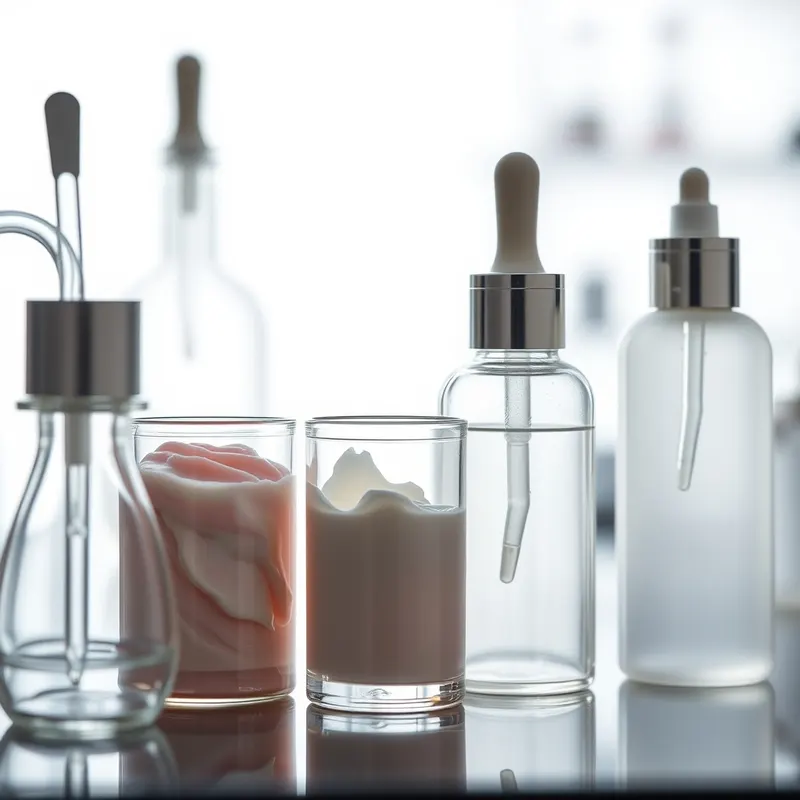
Formula Development and Sample Rounds: How to Manage Them
Sample phase breaks down where brand owners give feedback emotionally—feels light, bit sticky, scent isn't right. Comments like these don't guide a lab. Treat formula development like an engineering process: give written feedback on every sample in the same standardized format.
One working sample review format:
- **Texture**—spreadability on application, drying time, after-feel (matte, dewy, filmy).
- **Fragrance**—intensity on a 1–5 scale, and direction (floral, herbal, fragrance-free).
- **Color and appearance**—acceptable or not, and your position on natural extract color shifts.
- **Behavior in packaging**—how the texture dispenses from your chosen bottle or jar, how the pump performs.
- **Decision**—approve, request minor adjustment, or change direction. Ask for only two to three changes per round.
Build stability and microbiology testing into the timeline from the start. Samples held under heat, cold, and cycling temperatures reveal whether the formula won't separate, pH won't drift, and the preservative system works. Skipping this step shows up in market—cracked emulsions or color-shifted bottles returning means losses far larger than the sample cost. Don't assume timelines; the number of rounds and test duration depend on product type and should be clarified in the quote.
Packaging: Formula First, Design Second
Packaging decisions often come first because that's the fun part. The practical order is reversed—first determine what protection your formula needs, then let design work within that constraint.
Direct matching rules:
- **Actives sensitive to oxygen and light** (vitamin C derivatives, retinoids, certain plant extracts)—airless pump or opaque bottle preferred; open jar is weakest choice.
- **Thick creams**—wide-mouth jar or large-orifice pump; thin dropper won't dispense it.
- **Thin toner or essence**—flip-top or fine mist sprayer.
- **Oils and serums**—dropper, but check rubber bulb material compatibility with your formula.
The second point is cost, and this is where most brands slip up: packaging price isn't just the bottle cost. Secondary boxes, label material, finishing (hot stamp, embossing, spot UV), cartons, and shipping space all add up. Heavy glass jars look premium on shelf but increase shipping costs and breakage risk in e-commerce. If your sales are mainly online, create premium look through finishing on lighter, durable packaging instead.
Third, understand mold differences. Custom labels and finishing on stock packaging accomplish a lot; full custom molds give unique identity but tooling investment demands thinking several production runs ahead.

Manufacturer Evaluation: What to Look For, What to Ask
Choosing a good skincare manufacturer starts not with price comparison, but with capability comparison. First clarify who you're talking to: a factory, an OEM/ODM company managing a partner factory network, or a trading company. All three can work; the role just needs to be clear.
In your first conversation, ask:
- **Experience in your product category**—emulsions, sunscreens, supplements, and perfumes all demand different expertise.
- **Whether production happens in a GMP-certified facility and where quality control occurs.**
- **What happens with batch records, batch numbering, and retained samples.**
- **How documentation and testing for your target market are prepared**—this varies by product and country.
- **What the written terms are on formula ownership and confidentiality.**
Also note warning signs: saying yes to every question, avoiding written specifications, not providing technical sheets with samples, or promising formula exclusivity before contract. If any of these appear, slow down.
5FINE operates on a partner-managed model—production through GMP-certified partner factories in Thailand, Korea, Japan, and Dubai, with a single point of contact for formula, branding, packaging, and export. Evaluation method with any partner should stay the same: role clarity, written specifications, and decisions documented.
Documentation, Labeling, and First Production Budget
The least glamorous and most time-consuming part of brand building is regulatory preparation. Every country's process differs and rules keep shifting, so understand principles here and confirm details with your country's relevant authority or custom clearance agent.
- **Product notification or registration**—usually requires formula details, ingredient list, manufacturer information, and label draft.
- **Mandatory label information**—ingredients (INCI), quantity, batch number, manufacturing/expiration details, importer details, local language requirements.
- **Claim language**—keep the line clear between cosmetic and drug claims. Any claim you can't prove doesn't belong on label or in advertising.
- **Testing documentation**—stability, microbiology, and other reports by product type; these are prepared per-product basis.
On budget, your first run splits into four parts: one-time development cost (formula, samples, testing, design), packaging, per-unit manufacturing, and launch costs (photography, website, initial marketing budget). New brands often spend everything on the first three and have nothing left for the fourth—result: stock on hand and no demand.
For volume reference, standard OEM/ODM minimum order is 1,000 units per SKU. This is exactly why starting with fewer SKUs and focusing on a hero product makes economic sense. Price depends on product and quantity and is clarified in the quote when you're ready.
Need expert support?
Leave your details and our team will get back to you.
FAQ
Frequently asked questions
Do I need cosmetic chemistry knowledge to start a skincare brand?
No, but understanding terminology is essential. You don't need to formulate; you need to understand what emulsion, pH, active concentration, and preservative system mean, so your feedback on samples helps the lab and you don't make unrealistic demands. Technical depth comes from the manufacturer's team; direction comes from you.
Should my first product come through ODM or OEM?
It depends on whether your difference lies in formula or brand. If your strength is audience, story, and design, starting with ODM cuts both risk and time-to-market. If your entire claim rests on a specific formulation or ingredient combination, then OEM or full custom becomes necessary, and plan for extra sample rounds.
How many products should I launch together?
For most new brands, one hero product plus at most one or two supporting products is enough. Each additional SKU brings its own formula, packaging, documentation, and inventory. Since minimum order applies per SKU, capital spreads too thin too fast. The right time to expand your line is when your first product shows repeat purchases.
Who owns the formula—me or the manufacturer?
This depends entirely on contract terms, so never assume. ODM formulas typically stay with the manufacturer and may be used by multiple brands. In custom development, rights can be shared or belong to the brand—written terms decide it. Clarify confidentiality and formula ownership language at the start of negotiation.
Prepared by the 5Fine team for informational purposes. Some links may lead to referred partners.
Articles
Related articles
Skincare Packaging Design for New Brands: A Practical Guide for Founders
For a new skincare brand, packaging is often the first — and sometimes only — chance to make an impression on a retail shelf or a scrolling thumb. Yet many founders treat packaging
Private Label Glutathione Soap Manufacturer: A Brand Owner Guide
Glutathione soap is one of the most requested categories among Philippine beauty brands, and most founders begin by looking for a private label glutathione
KOL làm mỹ phẩm riêng bắt đầu từ đâu? 6 quyết định đầu tiên
Câu hỏi KOL làm mỹ phẩm riêng bắt đầu từ đâu thường được trả lời bằng một cái tên nhà máy. Thực tế, nhà máy là bước thứ ba hoặc thứ tư trong hàng việc.