
Buying guide
Serum Manufacturing in Thailand: Which Path Should You Choose for Your Brand?
Explore OEM skincare manufacturing in Thailand—the preferred route for launching your first product. Learn why serum is ideal for brand building and which strategy fits your vision

Many brand founders choose serum as their first product through a skincare manufacturer in Thailand because serum works perfectly for storytelling around ingredients and commands a higher price point than a moisturizer of the same volume. Yet under the umbrella term "contract manufacturing," there are at least three distinct paths, each with different costs, control levels, and ownership rights over the formula. This guide breaks down each route, the costs you'll encounter, how to choose packaging, and the pitfalls newcomers often fall into by deciding too quickly.
Why Serum Is Often Your Brand's Opening Move
Serum occupies a favorable position in any skincare line: small volume, light shipping costs, yet customers willingly pay more per milliliter than they would for a cream because they're buying active ingredients, not bulk. For a new brand, that means you can test market response with smaller inventory while maintaining margins healthy enough to reinvest in marketing.
Serum is also the easiest format to tell a story around. One hero active ingredient—niacinamide, vitamin C derivative, tea tree, centella asiatica, or herbal extracts that play to Thailand's raw material strengths—gives you a clean message for your product page. A multi-purpose product, by contrast, is much harder to communicate concisely, and far harder to advertise effectively.
But there's a flip side. Serum is a formulation type that demands higher technical skill than a cleanser or toner: the emulsion system or gel base must keep actives stable, pH must stay within the range where those actives work, and many water-loving actives dislike light or react with metals. As a result, serum typically requires more rounds of sample trials than simpler formats, and choosing your packaging is not a cosmetic decision—it's part of the formula itself. Understanding this from the start helps you set realistic expectations when beginning your product development journey with a skincare manufacturer.
Three Routes for OEM Skincare Manufacturing and What You Trade Off in Each
The first route is private label skincare, or ODM: you select from the factory's existing formula library, review the scent, color, and skin feel, then apply your own label. This is the fastest route with the fewest sample rounds, suited to when you want to test the market first. The trade-off: that formula may already be in use by another brand, so it's hard to make it your long-term differentiator.
The second route is OEM based on your spec: you bring a brief—required actives, desired concentration, ingredients to avoid, desired skin feel, price positioning—and the manufacturer adjusts or builds a formula to meet it. You gain more control than private label skincare, more sample rounds, and you'll need someone who can read an INCI list.
The third route is collaborative formula development from scratch: both sides work from concept, test raw materials, run stability studies. This path is for brands planning a truly proprietary product and a long-term sales strategy, because the R&D phase carries the highest cost and time investment.
A common mistake is choosing a path based on budget, then expecting the results of another path: taking an ODM formula but wanting it to be one-of-a-kind, or ordering a custom OEM but expecting it in a few weeks. Lock in your direction before asking for a quote, and you'll be able to compare quotes fairly.

What's Included in a Serum Manufacturing Quote
Many newcomers look only at the per-unit cost and assume that's their total cost. In reality, a serum project carries at least six cost categories, and they don't appear all at once.
- Formula development and trials: R&D effort, trial materials, revision rounds, sample shipping. The custom path is heaviest in this category.
- Testing: stability, packaging compatibility, microbiology, and any assays your target market requires.
- Packaging: bottle, pump head or dropper, carton, label, shrink wrap. Custom molds and premium finishes like hot stamping sit here.
- Design: branding, label layout, print files, revision rounds after approval.
- Manufacturing: blending, bottling, filling, capping, batch quality control.
- Documentation and shipping: regulatory paperwork for your market, freight, insurance, duties, and import fees.
The exact figures depend on your product, materials, and volume, so there's no universal price; the team will advise when quoting. But you should ask for a quote broken down by these six categories instead of one lump figure. This breakdown helps you see which costs are one-time, which repeat per batch, and which you might trim without sacrificing quality.
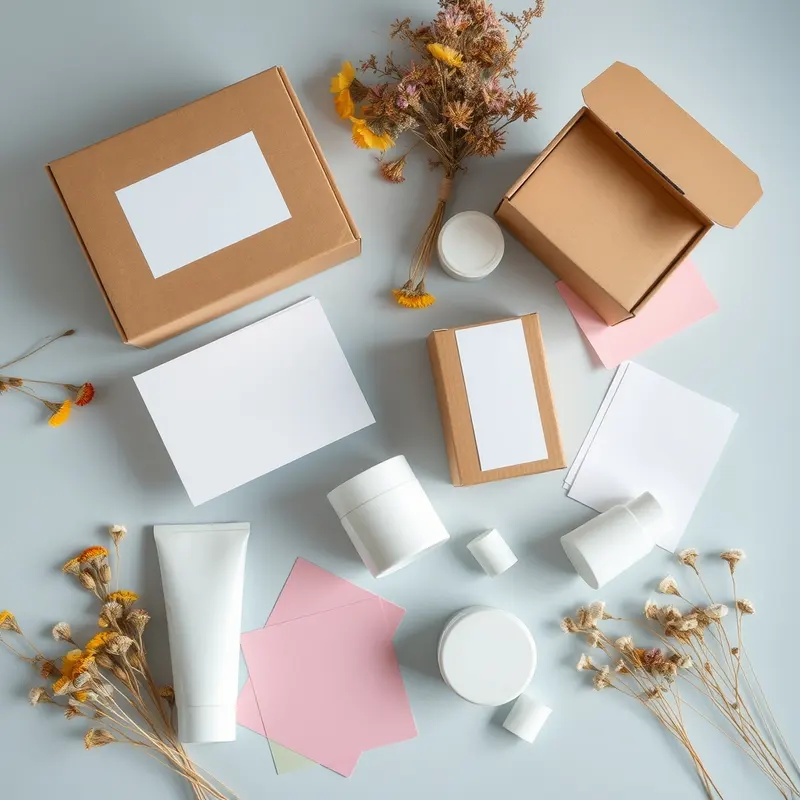
Choosing Serum Packaging: Dropper, Airless Pump, or Standard Pump Bottle
Serum packaging affects your formula more than most newcomers realize. A glass dropper delivers a premium feel and dose control, but every opening lets air into the bottle, making it unsuitable for actives prone to oxidation. Droppers are also heavier and more fragile over long-distance shipping.
An airless pump stays sealed, reduces air exposure, and delivers consistent dosage—often the preferred choice for serum containing sensitive actives. In trade, the mechanism is complex and demands your serum's viscosity fall within a working pump range; serum that's too thin or too thick causes problems.
A standard pump bottle is the middle ground: familiar to consumers, easy to source, affordable, but not as protective as an airless system.
Three things to verify before committing to any choice:
- Compatibility testing: the same formula in two different packaging samples may perform differently after weeks at elevated temperature.
- Print zone: curved surfaces and small areas limit text space, yet skincare labels have mandatory information that must appear.
- Supply and molds: off-the-shelf packaging gets you moving fast; custom molds create a unique shape but represent a separate capital investment and are hard to change later.
Packaging decisions should run parallel with formula development, not after the formula is locked.
Regulatory Paperwork, Labels, and Your Target Market
A beautiful serum bottle that fails to clear customs in your sales market stays in a warehouse. Two sets of procedures must be kept distinct: those at the point of manufacture and those at the point of sale.
On the Thailand side, cosmetics fall under Thailand's FDA oversight; the manufacturer holds the facility and product registration for export. On your side, you or your regulatory partner handles the notification and labeling according to the rules in your market. Since regulations shift over time, treat any information you read online as reference only and verify with your local regulator or customs broker before printing large label runs.
Documents typically exchanged in a serum project include: full ingredient list, batch-specific analysis sheets, manufacturing facility records, export paperwork per item. These are supplied on request and per batch when you order, so include your full documentation checklist in your quote request—don't wait until production is done.
Certifications should be mentioned only in general terms: manufactured at a GMP-certified facility, regulatory files prepared per market requirements. Never claim on packaging what you don't yet have on paper.
Five Common Mistakes in Your First Serum Project
First, approve samples based on your own feeling alone. You've been staring at this product too long to be objective. Have five to ten people from your actual customer group use the sample for several days and ask three fixed questions: how it absorbs, the scent, and whether they'd buy it at your intended price.
Second, lock your label before you lock your formula. Formula changes mean INCI changes, and you'll have to reprint.
Third, pour your entire budget into manufacturing and leave nothing for market launch. A batch of serum sitting in a warehouse because there's no money for content marketing is a very common scenario. When budgeting, separate manufacturing costs from go-to-market spend.
Fourth, skip stability testing to move faster. Separation or color shifts usually show up weeks later, right when your inventory is on a distributor's shelf.
Fifth, treat brand strategy as an afterthought. Your name, positioning statement, photography, and sales narrative should take shape alongside your sample trials, because they drive both your packaging design and your label messaging. A brand with a clear story commands a higher price per bottle than an identical serum with no story behind it.
Need expert support?
Leave your details and our team will get back to you.
FAQ
Frequently asked questions
What's the difference between ODM and OEM when manufacturing serum?
ODM means you choose a formula the factory already has in its library and apply your label—fast and few revisions, but the formula isn't exclusive to you. OEM means the skincare manufacturer creates a formula to your spec: your required actives, desired concentration, feel, and price point. You get much more control over active ingredients and product sensation, but you'll need more development time and more sample rounds to dial it in.
Should my serum come in a dropper or airless pump?
It depends on your actives and usage. A dropper feels premium and lets users control dosage, but it exposes the serum to air each time the bottle opens—not ideal for easily oxidized actives. An airless pump is better sealed and suited to sensitive actives, but it demands your serum's viscosity fall within the pump's working range. A standard pump bottle is the practical middle road. Test compatibility between your formula and whichever packaging you're considering before finalizing your choice.
Do I need to handle regulatory filing in my own country myself?
Registration and labeling procedures in your sales market are typically your responsibility or that of a regulatory service partner you hire. The skincare manufacturer supplies product and facility documentation according to their market's rules when you order. Regulations change frequently, so treat any information you find online as a starting point and confirm requirements with your local regulator or customs authority before printing your labels at scale.
How long does it take from concept to finished serum bottle?
There's no universal timeline—it depends on which route you choose, formula complexity, the number of sample rounds you need, your packaging source, and any testing your target market requires. The private label route is typically faster than collaborative formula development. Your specific timeline will be confirmed once both sides agree on the project scope during the quoting phase.
Prepared by the 5Fine team for informational purposes. Some links may lead to referred partners.
Articles
Related articles
Contract Manufacturing Skincare: How It Works for Brand Owners
Contract manufacturing skincare lets a brand owner launch a serum, cream or sunscreen without owning a lab or a production line. Here is how the model works and what you decide.
How to Start Your Own Skincare Brand: A 7-Step Plan for Brand Owners
Learning how to start your own skincare brand is less about finding a factory and more about making seven decisions in the right order. This plan walks brand owners from positioning to first production.
Private Label Supplements Thailand: A Buyer's Guide for Brand Owners in the Philippines
If you're a Filipino entrepreneur, distributor, or clinic owner exploring private label supplements thailand options, you've probably noticed the country sits at the center of a st